
Key Benefits of Remote Monitoring in IoT for Industrial Equipment

Key Benefits of Remote Monitoring in IoT for Industrial Equipment

Remote Monitoring in IoT for Industrial Equipment

Remote monitoring in IoT allows real-time collection and management of data from connected devices, enabling better performance, efficiency and maintenance of industrial assets.

Industrial Equipment’s:

Remote monitoring is used for various industrial equipment, including:

  • Machinery – Generator, Air Compressor, Crane & Hoist
  • Sensors – Temperature & Pressure
  • Motors & Pumps
  • HVAC Systems & Cold Storage Monitoring
  • Cleaning Equipment & Construction Equipment
  • Electric Vehicles, Trucks & Forklift

Key parameters monitored include:

  • Performance Metrics – Speed, efficiency, power consumption
  • Health Indicators – Temperature, vibration, pressure
  • Usage Data – Operating hours, cycle counts
  • Maintenance Alerts – Oil levels, fluid leaks, fault detection

Benefits:

  • Real-Time Insights – Access real-time data to monitor equipment performance and prevent downtime.
  • Predictive Maintenance – Early detection of issues helps avoid costly breakdowns.
  • Operational Efficiency – Optimize resource usage and improve productivity.
  • Cost Savings – Minimize maintenance costs and reduce unnecessary repairs.
  • Enhanced Safety – Monitor critical parameters to ensure safe operations and reduce risks.

Trinetra Tsense offers advanced Industrial IoT Solutions to help streamline operations and improve efficiency. Contact us today for effective industrial machine remote monitoring!

Streamlining Construction Equipment Management with JCB Tracking System

JCB Tracking System

IoT technology is revolutionizing the construction sector and JCB tracking systems are leading the way. Trinetra Tsense, a leading Industrial IoT solutions provider, offers innovative tools to optimize equipment management for greater efficiency and cost savings.

What is a JCB Tracking System?

A JCB tracking system utilizes IoT and GPS to provide real-time insights into equipment location, usage, and performance, empowering construction managers to make informed decisions and improve productivity overall.

Key Benefits:

  • Real-Time Tracking: Reduce idle time, prevent theft and enhance visibility by tracking the location of equipment.
  • Maintenance Alerts: Predictive maintenance to ensure timely servicing, thereby reducing downtime and enhancing reliability.
  • Increased Productivity: Usage patterns will help deploy equipment efficiently and remove bottlenecks.
  • Cost Efficiency: Track engine idling and usage hours to control fuel and operational costs.
  • Safety Compliance: Enhance safety by monitoring critical parameters like load limits and adhering to regulations.

Why Choose Trinetra Tsense?

Trinetra Tsense provides JCB tracking systems with advanced analytics, customizable alerts, and intuitive dashboards, tailored to meet the needs of the construction sector.

Maximize ROI and streamline your operations with Trinetra Tsense’s IoT solutions. Contact us today to learn how we can transform your construction equipment management.


Key Benefits of Remote Monitoring of Equipment Using IIoT

Remote Monitoring of Equipment Using IIoT

The Industrial Internet of Things (IIoT) is revolutionizing how industries monitor equipment. Here are the key benefits of remote monitoring using IIoT:

  • Real-Time Data Access: IIoT enables instant access to real-time data, allowing organizations to track performance metrics and make informed decisions quickly, enhancing operational efficiency.
  • Predictive Maintenance: Continuous monitoring and data analysis help predict equipment failures, minimizing downtime and extending machinery lifespan, resulting in cost savings.
  • Enhanced Safety: IIoT systems monitor critical parameters to detect potential hazards early, improving safety for personnel and protecting valuable assets.
  • Improved Resource Allocation: Analyzing equipment usage data allows companies to optimize resource allocation, ensuring efficient operations and better planning.
  • Cost Reduction: Minimizing unplanned downtime and maintenance costs leads to significant operational savings, making IIoT a worthwhile investment.
  • Increased Operational Agility: IIoT enables quick responses to changing conditions, improving flexibility and adaptability in operations.
  • Enhanced Compliance & Reporting: Automated monitoring simplifies data collection for regulatory compliance, reducing the risk of non-compliance and penalties

Top 8 Industries Benefiting from IIoT Remote Monitoring

  • Manufacturing
  • Oil and Gas
  • Healthcare
  • Transportation and Logistics
  • Agriculture
  • Energy and Utilities
  • Construction
  • Food and Beverage

By leveraging IIoT technologies for remote monitoring, these industries can enhance productivity, safety, and overall efficiency. Explore our remote asset monitoring solution today!

How Can You Increase Your Productivity with IoT-Based Construction Equipment?

IoT-Based Construction Equipment

In today’s competitive construction industry, boosting productivity is essential. IoT technology in construction equipment offers innovative ways to enhance operations.

Here’s how IoT can help:

  • Real-Time Equipment Monitoring: IoT sensors provide real-time data on equipment performance and location, allowing for timely servicing before breakdowns occur and reducing downtime.
  • Predictive Maintenance: By analyzing sensor data, IoT enables predictive maintenance that forecasts when maintenance is needed, minimizing unexpected failures and repair costs.
  • Enhanced Safety and Compliance: IoT devices monitor safety conditions and equipment status, sending alerts when standards are not met, ensuring a safer working environment, and reducing accidents.
  • Efficient Resource Management: IoT technology offers insights into resource allocation, such as fuel and material usage, helping to identify inefficiencies and adhere to budgets and timelines.
  • Data-Driven Decision Making: Access to real-time data analytics empowers construction managers to make informed decisions about timelines, equipment efficiency, and workforce productivity.
  • Improved Communication and Collaboration: Centralized data sharing enhances communication, enabling field workers to report issues quickly and reduce delays, fostering a more efficient workflow.
  • Remote Monitoring and Control: IoT allows for remote oversight of operations, enabling managers to adjust workflows in real-time, which is crucial for effectively managing large projects.

Integrating IoT-based construction equipment enhances productivity through improved monitoring, predictive maintenance and data-driven decisions.  

Ready to transform your construction processes? Contact us today to learn how our construction equipment Industrial IoT software can boost efficiency on your job sites!


Transform Warehouse Operations: The Benefits of Forklift Telematics & IoT

Benefits of Forklift Telematics and IoT

Achieve higher standards with IoT technology for increased uptime, enhanced safety, and optimized forklift fleet utilization. Forklift telematics, powered by Industrial IoT, revolutionizes warehouse operations by tackling key challenges and delivering significant benefits.

What Is Forklift Telematics?

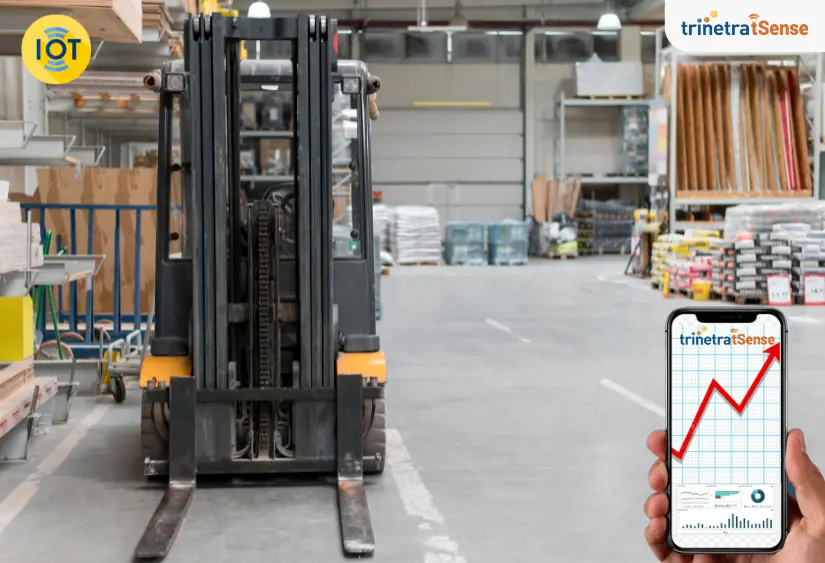
Forklift telematics integrates systems with forklifts to collect and analyze data on performance. Using IoT sensors and connected devices, it tracks metrics like lift height, load weight, operational hours, and fuel consumption in real-time, offering valuable insights into forklift usage and warehouse efficiency.

Key Challenges:

  • Visibility Issues: Traditional warehouse operations often lack detailed visibility into forklift performance and utilization. This can result in inefficient resource allocation and missed opportunities for optimization.
  • Maintenance Challenges: Without real-time data, predicting equipment maintenance needs is difficult. This can lead to unexpected breakdowns, costly repairs and downtime.
  • Safety Concerns: Managing warehouse safety is critical, but it can be challenging without accurate data on equipment conditions and operator behaviors.

Advantages

  • Improved Operational Efficiency: Forklift telematics provides real-time data on equipment performance, enabling warehouse managers to monitor usage patterns, identify inefficiencies, and optimize operations for better productivity.
  • Predictive Maintenance: By analyzing data on forklift performance and wear, telematics systems facilitate predictive maintenance. This proactive approach helps prevent unexpected breakdowns and reduces maintenance costs.
  • Enhanced Safety: Telematics enable the monitoring of operator behavior and equipment status, improving safety protocols and reducing the risk of accidents and equipment damage.
  • Cost Savings: Real-time insights into forklift utilization and fuel consumption allow for more efficient resource management, leading to significant cost reductions in operations and maintenance.

Embracing forklift telematics with IIoT solutions transforms warehouse operations by addressing key challenges and delivering substantial benefits. Enhance your warehouse efficiency, safety and cost-effectiveness with advanced telematics technology through our Forklift Monitoring Solution.

How IoT is Transforming Industrial Fork Lifting Equipment

IoT in Forklifting Equipment

The Internet of Things (IoT) is revolutionizing the management and functionality of industrial fork lifting equipment. Here’s how IoT addresses key challenges and delivers substantial benefits in this sector.

Key Challenges

  • Maintenance and Downtime: Unexpected breakdowns and maintenance issues often cause costly downtime and inefficiencies.
  • Operational Efficiency: Without accurate data, managing forklift performance and productivity is challenging.
  • Safety Concerns: Traditional safety measures may fail to address real-time issues, increasing accident risks.
  • Fleet Management: Coordinating a large forklift fleet can be complex and inefficient without real-time insights.

Benefits of IoT Integration

  • Predictive Maintenance: Sensors monitor equipment health, predicting maintenance needs and reducing unplanned downtime.
  • Enhanced Efficiency: Real-time data improves forklift scheduling and deployment, boosting productivity.
  • Improved Safety: Sensors identify unsafe driving patterns and mechanical issues, enhancing safety.
  • Fleet Optimization: IoT offers insights into fleet performance, supporting cost-effective management.
  • Real-time Decision-Making: Immediate data access enables quick problem resolution and smoother operations.
  • Overall Cost Control: Reduced downtime, optimized usage, and improved safety lead to significant cost savings.

Applications:

  • Warehouse Operations
  • Manufacturing and Machine Shops
  • Distribution Centers
  • Retail and Supply Chain Management
  • Construction Sites

IoT is transforming industrial fork lifting equipment by enhancing maintenance, efficiency, safety, and fleet management. To fully leverage these benefits and maximize your equipment’s potential, integrate IoT solutions today.

Contact Trinetra Tsense to discover how our Industrial IoT solutions can revolutionize your operations.

The Importance of Condition Based Monitoring in Industrial IoT

Condition Based Monitoring in Industrial IoT

In the fast-evolving industrial landscape, optimizing performance and minimizing downtime are crucial. Condition-Based Monitoring (CBM) has emerged as a revolutionary approach, especially with the advent of Industrial IoT (IIoT).

Trinetra Tsense, a leading Industrial IoT Solutions Provider, underscores its significance in enhancing maintenance strategies and operational efficiency.

What is Condition-Based Monitoring?

Condition-Based Monitoring continuously tracks equipment conditions using real-time data to make informed maintenance decisions. Unlike scheduled preventive maintenance, this approach triggers maintenance actions only when necessary, leveraging IIoT technologies that collect and analyze data from embedded sensors.

Key Benefits of Condition-Based Monitoring:

Reduced Downtime & Increased Equipment Lifespan

This approach detects early signs of wear, reducing unexpected failures and extending machinery’s lifespan. This proactive strategy enhances productivity and assures maximum effectiveness.

Cost Savings on Maintenance

By optimizing maintenance schedules, it avoids unnecessary part replacements and labor costs. This targeted strategy streamlines maintenance activities, leading to significant cost savings.

Enhanced Safety and Risk Management

By identifying and mitigating risks, it improves safety and prevents accidents, safeguarding workers and reducing liability.

Data-Driven Decision Making

Incorporating IIoT offers helpful information that sheds light on the operation of equipment. This makes it possible to make more informed choices, streamline procedures and plan adaptive maintenance.

Sustainability and Environmental Impact

Efficient maintenance practices reduce energy consumption and carbon emissions. This ensures optimal machinery operation, aligning with green practices and corporate social responsibility.

How Trinetra Tsense Enhances Condition-Based Monitoring with IIoT Solutions

Trinetra Tsense offers advanced IIoT solutions to empower industries in leveraging this approach effectively. Their comprehensive suite includes:

  • Real-Time Data Collection: Sensors capture critical parameters, providing continuous data for analysis.
  • Predictive Analytics: Algorithms predict failures and recommend maintenance actions.
  • Remote Monitoring: Cloud-based systems make it possible for swift problem solving.
  • Customizable Alerts: Configurable alerts notify stakeholders of any deviations.
  • Integration Capabilities: A smooth transition is ensured through a seamless integration with the present systems.

Are you ready to make changes to your maintenance tactics in order to boost operational efficiency? Contact Trinetra Tsense today and discover how our IIoT solutions can revolutionize your industrial operations.

The benefits of Industrial IoT For Manufacturers

industrial internet of things for manufacturing

The Power of Connected Machines: How Industrial IoT Transforms Manufacturing

The industrial landscape is undergoing a revolution driven by data.  Industrial IoT (IIoT) is at the heart of this transformation, connecting machines, sensors, and devices to create a network of real-time insights. But what exactly is IIoT, and how can it benefit manufacturers?

What is Industrial IoT?

Imagine your factory floor abuzz with activity, but each machine whispering valuable information. That’s the power of IIoT. Sensors embedded in equipment collect data on performance, energy use, and potential issues. This data is then transmitted and analyzed, providing manufacturers with unprecedented visibility into their operations.

Types of Industrial IoT Devices:

A wide range of devices make up the IIoT ecosystem:

Sensors: These are the eyes and ears of your factory, monitoring temperature, vibration, pressure, and other critical parameters.

Controllers and Gateways: These devices collect and transmit sensor data to a central platform for processing and analysis.

Actuators: Based on analyzed data, actuators can take corrective actions, like adjusting machine settings or triggering alerts.

Benefits of Industrial IoT for Manufacturers:

The advantages of IIoT are numerous:

Predictive Maintenance: By analyzing sensor data, manufacturers can anticipate equipment failures before they happen, preventing costly downtime and repairs.

Enhanced Quality Control: Real-time data from sensors allows for proactive quality control, identifying defects early in the production line and minimizing rework.

Data-Driven Decisions: IIoT provides a wealth of data that empowers manufacturers to make informed decisions about production processes, resource allocation, and overall efficiency.

Increased Agility: With real-time data, manufacturers can quickly adapt production lines to meet changing customer demands, fostering greater agility in a dynamic market.

Innovation Gateway: IIoT unlocks doors to exciting possibilities, like creating digital twins of your factory floor for virtual process optimization. The data can also fuel advancements in machine learning and artificial intelligence, further transforming manufacturing capabilities.

The Benefits of Connecting Industrial IoT with Trinetra tsense:

Trinetra tsense is your one-stop shop for navigating the world of IIoT. We offer a comprehensive suite of IIoT solutions designed to empower your manufacturing operations. Our team of experts will help you design, implement, and manage your IIoT infrastructure, ensuring you reap the maximum benefits.

In conclusion, IIoT is a game-changer for manufacturers. By harnessing the power of connected machines and data-driven insights, you can unlock a new era of efficiency, innovation, and success for your business. Partner with Trinetra tsense, and let’s transform your manufacturing unit into a data-driven powerhouse.

Maximizing Efficiency: The Impact of IoT Predictive Maintenance

Impact of IoT Predictive Maintenance

In today’s industry, efficiency and reliability are paramount. Downtime equals lost revenue and productivity. Enter IoT predictive maintenance, revolutionizing asset management for businesses. Let’s explore its workings and benefits:

What is IoT Predictive Maintenance?

  • IoT predictive maintenance is a proactive approach to maintenance that utilizes data from Internet of Things (IoT) devices to anticipate equipment failures before they occur.
  • By harnessing real-time data and analytics, IoT predictive maintenance aims to optimize asset performance and minimize downtime.

How Does IoT Help in Predictive Maintenance?

  • Continuous Monitoring: IoT devices gather data in real-time, providing insights into equipment health and performance.
  • Predictive Analytics: Advanced analytics algorithms process the data, identifying patterns and anomalies that indicate potential failures.
  • Proactive Intervention: Armed with predictive insights, maintenance teams can take proactive measures to address issues before they escalate, minimizing downtime and reducing costs.

Components of IoT-based Predictive Maintenance:

  • IoT Sensors: These devices collect various types of data, such as temperature, vibration, and pressure, from equipment.
  • Connectivity: IoT devices transmit data to centralized platforms or cloud-based systems for analysis.
  • Data driven Analytics: Advanced analytics algorithms process the data to detect patterns and anomalies.
  • Predictive Models: These models predict equipment failures based on historical data and real-time insights.

IoT Predictive Maintenance Industry Applications:

  • Manufacturing: Predictive maintenance ensures uninterrupted production lines and optimal equipment performance.
  • Transportation: IoT-enabled predictive maintenance enhances fleet efficiency and safety by identifying maintenance needs in advance.
  • Healthcare: Medical equipment maintenance can be optimized, reducing the risk of critical failures and ensuring patient safety.

Benefits of IoT-based Predictive Maintenance:

  • Reduced Downtime: Proactive maintenance minimizes unplanned downtime, maximizing operational efficiency.
  • Cost Savings: By addressing issues before they escalate, businesses save on repair costs and avoid costly equipment failures.
  • Enhanced Safety: Predictive maintenance improves equipment reliability, ensuring a safer working environment for employees.

IoT predictive maintenance marks a paradigm shift, empowering businesses to optimize operational efficiency. Leveraging real-time data and advanced analytics unlocks reliability, efficiency, and cost savings, securing a competitive edge in the dynamic marketplace.

With Trinetra tSense leading the charge in IoT solutions, businesses can confidently embrace the future of asset management and stay ahead of maintenance needs

How Machine Learning (ML) powered Industrial IoT Transforms Manufacturing?

Machine Learning (ML) powered Industrial IoT

Industrial IoT (IIoT) refers to the network of physical devices embedded with sensors and software that collect and exchange data. Machine learning (ML) adds an intelligence layer to IIoT, turning this data into actionable insights.

Types of ML-powered Industrial IoT devices can include:

Smart sensors: These sensors collect a wider range of data than traditional sensors and can transmit it wirelessly.

Predictive maintenance devices: These devices are specifically designed to monitor equipment health and predict failures.

ML-powered scheduling: Optimize production schedules using historical data and real-time info for maximum efficiency.

Smart energy management: Use machine learning to analyze energy data and find ways to optimize consumption, lowering costs and promoting sustainability.

Benefits of ML-powered Industrial IoT for Manufacturers:

The advantages of IIoT are numerous, especially when coupled with machine learning (ML):

Predictive Maintenance: Analyzing sensor data to forecast equipment failures, thereby preventing downtime and ensuring uninterrupted production.

Enhanced Quality Control: Real-time analysis of sensor data enables early detection of quality issues, leading to reduced defects and higher product standards.

Data-Driven Decisions: Processing extensive IIoT data reveals valuable insights for optimizing production processes and resource allocation, fostering informed decision-making.

Increased Agility: Leveraging real-time data empowers manufacturers to swiftly adapt to fluctuating demands and market conditions, ensuring operational flexibility and responsiveness.

Innovation: Utilizing IIoT data to develop digital twins of factories, enabling simulation and iterative improvement of manufacturing processes and systems.

In essence, ML empowers IIoT by providing the analytical muscle to make sense of the data collected from connected machines. This data-driven approach allows manufacturers to optimize processes, predict problems, and make better decisions, ultimately transforming their operations.